Ask a beginner what their pot is made of and they will usually say "clay," as if that settled it. But "clay" covers a family of very different materials, and which one you reach for shapes the whole experience: how easily it throws, how high it must fire, how strong it ends up, and whether it will hold tea without weeping it back out onto the table.
There are three you need to know. Get the distinctions straight and a great deal of beginner confusion simply dissolves.
Earthenware: warm, forgiving, low-fired
Earthenware is the oldest and most forgiving. It fires at relatively low temperatures and stays slightly porous, which is why traditional earthenware is glazed to hold liquid. It comes in those warm terracotta reds and buffs. For a beginner it is kind: plastic, easy to shape, tolerant of mistakes. Its trade-off is strength — earthenware chips and breaks more readily than the others.
Stoneware: the everyday workhorse
Stoneware fires hotter and, crucially, vitrifies — the clay particles fuse into something dense and effectively waterproof even before glazing. This is the clay behind most handmade mugs, bowls and dinnerware, because it is tough, holds liquid, and survives daily use and the dishwasher. It is a little less plastic than earthenware but not difficult. If you want to make things to actually use, stoneware is usually the answer.
“Choose the clay for the life the object will live. A decorative bowl and a daily mug want different earth under the glaze.”
Porcelain: beautiful and unforgiving
Porcelain fires hottest, ends up white, dense and faintly translucent when thin, and rings like a bell. It is also the diva of the three: less plastic, prone to slumping and cracking, unforgiving of clumsy hands. The luminous results are why people persist, but most teachers steer beginners away from it until the fundamentals are solid.
How to actually choose
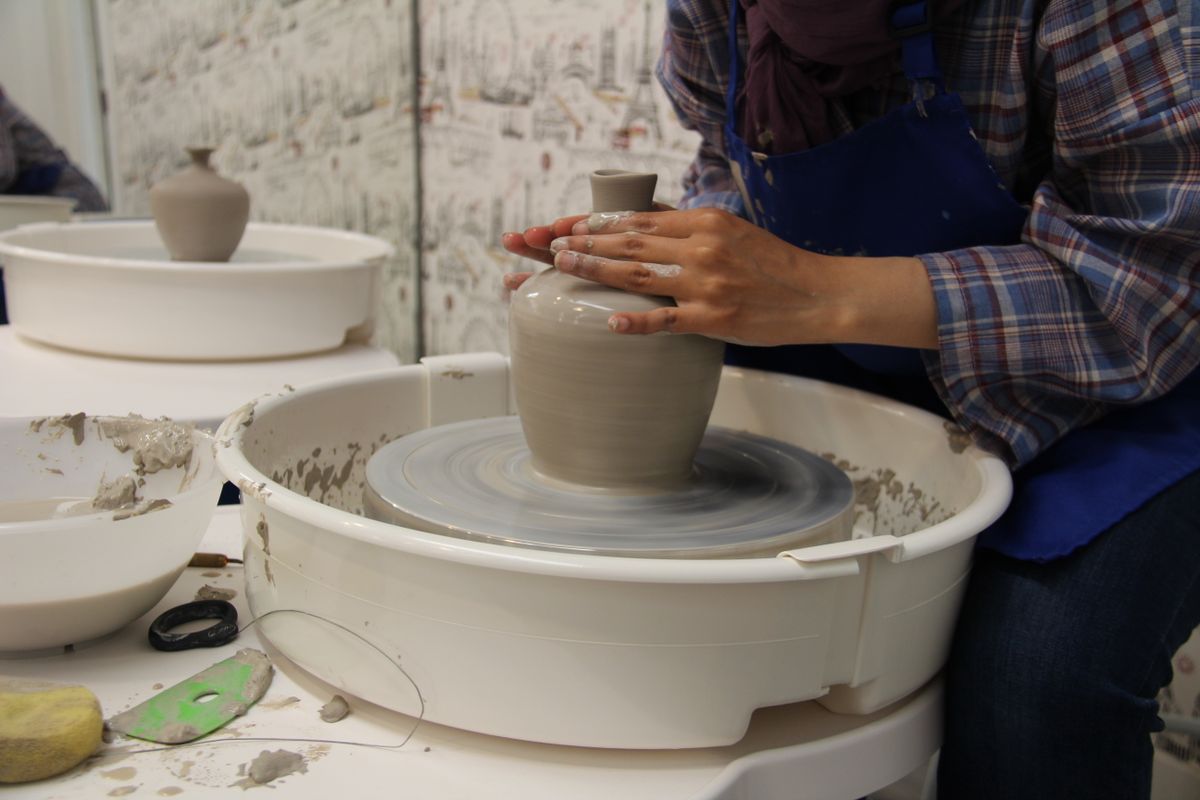
Two questions settle it. What temperature can your kiln reach, and what will the object do for a living? A low-firing setup points you to earthenware. A piece meant for daily, watertight use points to stoneware. The wish for delicate, white translucency points to porcelain — and to patience. Match the clay to the kiln and the purpose, and you have removed half the problems before you have touched the wheel.