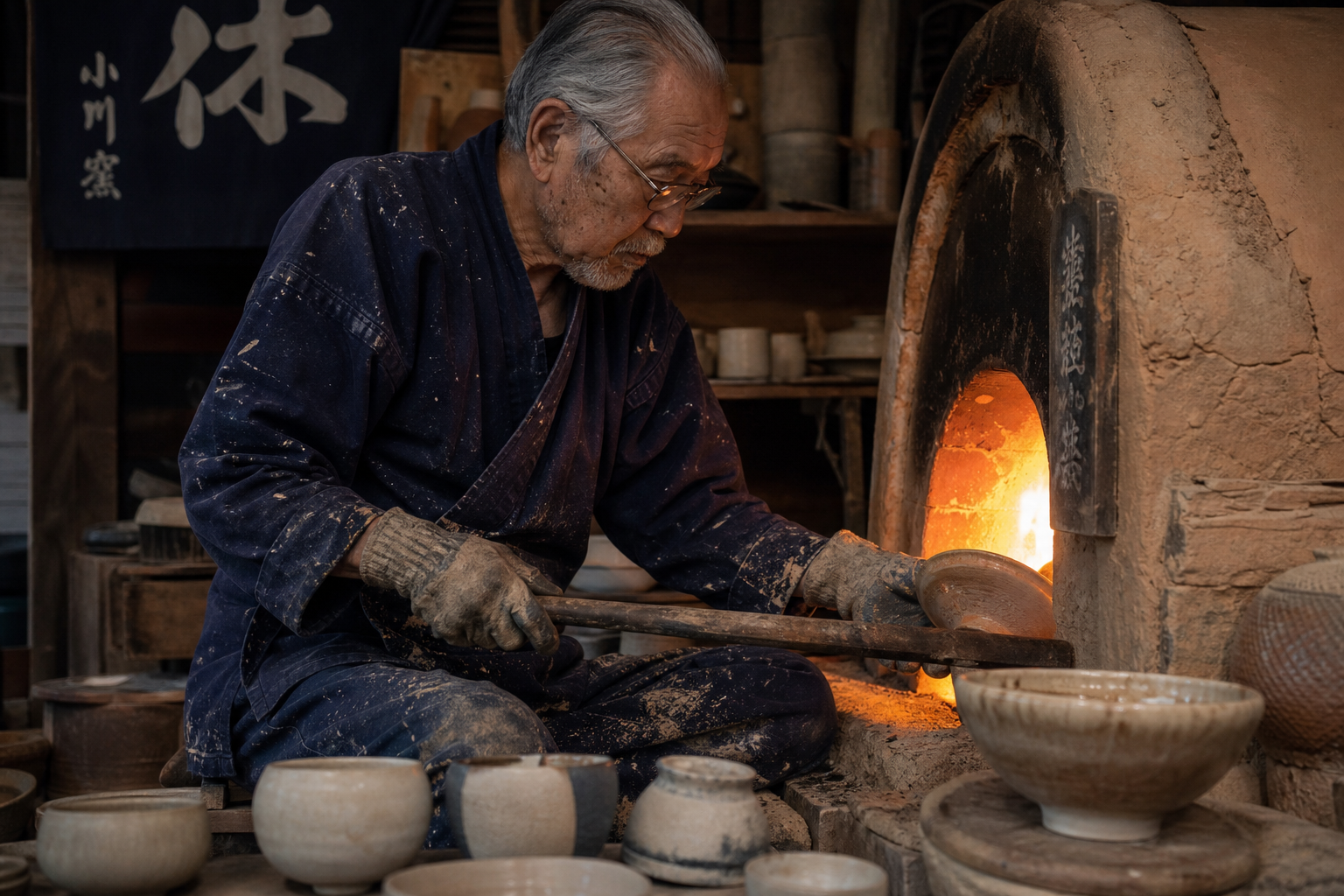
The first thing you notice at the Nakamura workshop is the woodpile. It is the size of a small house: split red pine, stacked and seasoning, enough to feed a single firing. The kiln it feeds is an anagama, a sloping tunnel of brick and clay dug into the hillside, and it has been lit in this same spot, by this same family, for roughly eight hundred years.
Kenji Nakamura is the fifteenth potter in his line to tend it. He is unhurried in the way of people who measure their craft in days rather than minutes. "The kiln decides," he says, more than once, as if the building itself were a senior partner in the business.
Why five days of fire?
Modern studio pottery is a fast affair. An electric kiln reaches temperature in hours, holds it precisely, and shuts off on a timer. The pots come out exactly the colour the glaze chart promised. The anagama refuses all of that certainty. Wood ash, carried on the draught, lands on the pots and melts into a natural glaze. Flame paths leave scorch marks and blushes. Where a pot sits in the chamber changes everything.
Nakamura and two apprentices feed the fire in shifts, around the clock, for five days. They read the colour of the flame to judge the heat: straw, then orange, then a white that hurts to look at. There is no pyrometer they fully trust. "The eye is older than the instrument," he says.
“The kiln is not a machine that bakes clay. It is a season the pots have to live through.”
Kenji Nakamura
The colour nobody can copy
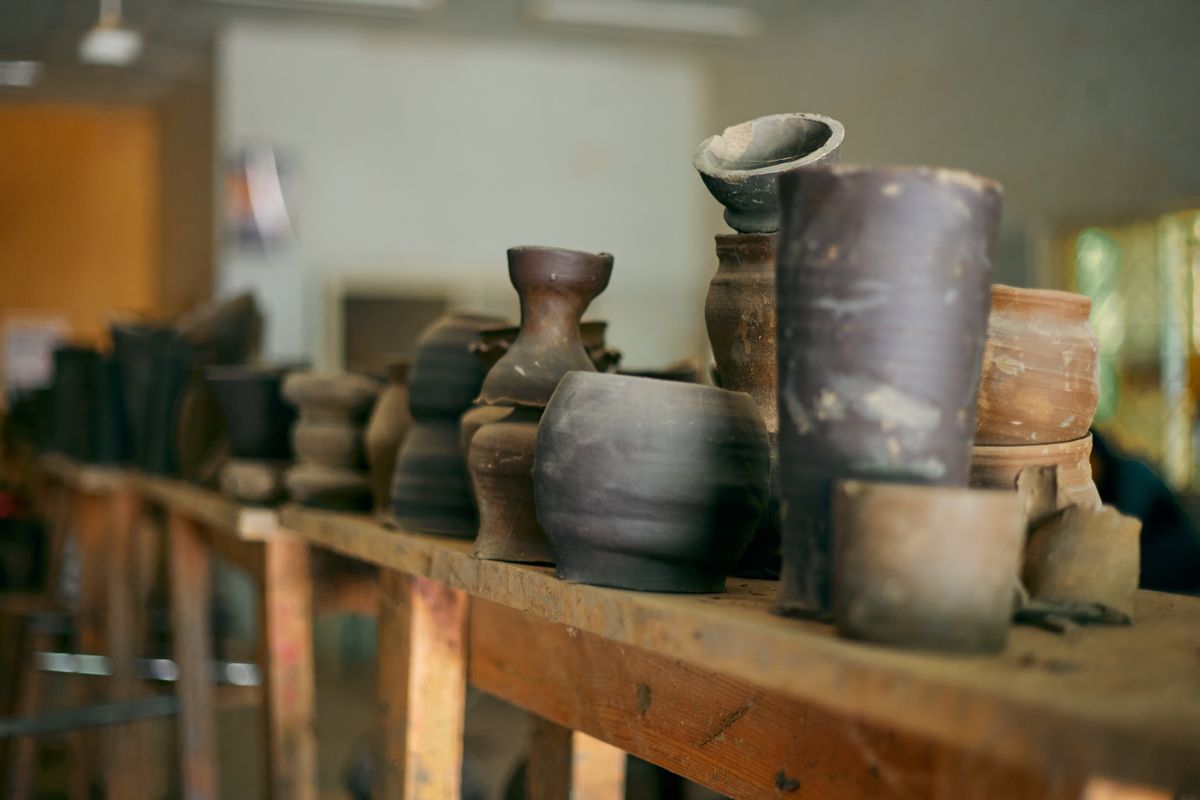
The reason ceramicists make the pilgrimage to villages like this one is a surface that wood firing produces and almost nothing else can: a deep, shifting green-gold where ash has pooled and run, with a texture like the inside of an oyster shell. Contemporary potters have spent decades trying to bottle the look in a brushable glaze. They get close. They never get there, because the effect is not really a glaze at all but a record of five days of accident and attention.
That is also why each firing is a gamble. A bad draught, a wet log, a shift in the wind, and a week of work emerges cracked or dull. Nakamura reckons he keeps perhaps six pieces in ten. The failures are not hidden away; they are studied, because the kiln is teaching even when it disappoints.
What gets lost when the fire goes out
Nakamura is candid that the economics are difficult. A single firing costs a fortune in wood and labour and yields a handful of sellable pots. Several anagama lineages near him have already closed; the kilns sit cold, the knowledge dispersing with each potter who retires without an apprentice. He took on his two students partly, he admits, so that the technique would have somewhere to go.
Ask him whether it is worth it and he gestures at a tea bowl on the bench, its surface caught somewhere between stone and water. "This took eight hundred years to learn how to make," he says. "It would take one generation to forget."