Walk into any craft shop, or worse, any online marketplace, and the message is loud: you need more. Bigger kits, specialist gadgets, the deluxe set with the embossed case. For a beginner it is genuinely the wrong advice. The makers who improve fastest tend to own the fewest tools and know each one intimately.
There is a simple reason. A tool you use every day teaches you something every day. A tool you bought "just in case" sits in a drawer teaching you nothing. So the question is not what could you use, but what will you reach for again and again.
The five that earn their place
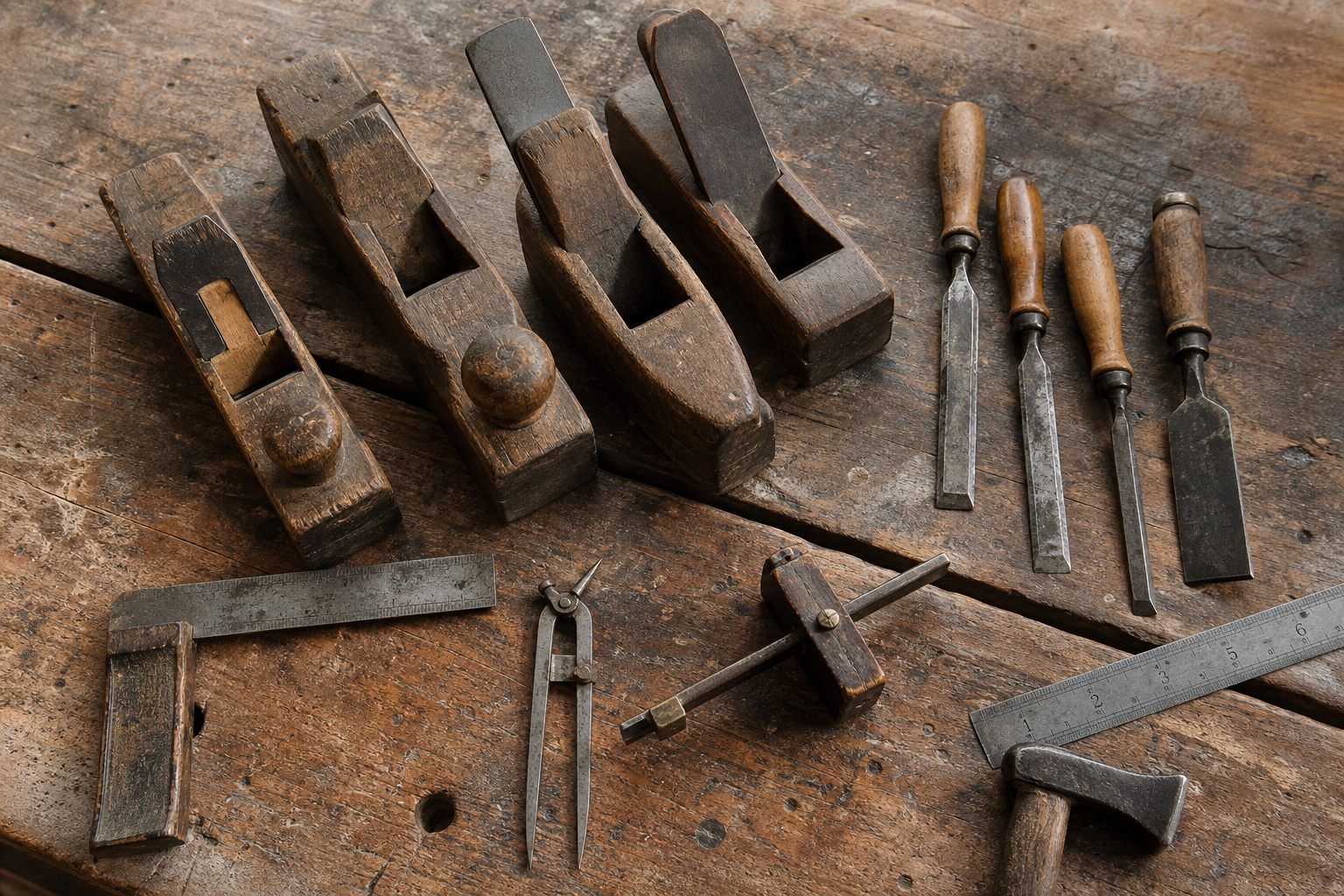
Across most hand crafts, the same shortlist appears, in different costumes. First, a marking and measuring tool — a good square, a tape, a marking gauge. Accuracy at the start saves grief at the end, and this is where beginners under-invest most.
Second, a single sharp cutting tool suited to your craft — a quality knife, a bench chisel, a pair of proper shears. Sharp is safer than blunt and does cleaner work. Third, a striking or shaping tool — a mallet, a smoothing implement, whatever moves the material. Fourth, a holding device — a clamp, a vice, pins — because a piece that moves while you work is a piece that goes wrong. Fifth, a means of finishing — abrasive papers, a burnisher, a fine file — to take the piece from "made" to "considered."
“A beginner with five sharp tools will outwork a beginner with fifty dull ones, every time.”
The tempting extras that can wait
Power tools are the obvious temptation, and most can wait. They remove material fast, which means they remove your mistakes fast too — not ideal when you are still learning to see the mistake coming. Specialist jigs, single-purpose gadgets, and "complete" branded kits are the other money pits. You will buy the right specialist tool far more wisely once a specific project demands it.
Buy once, buy well
One rule covers almost everything: buy the best version of a few essentials rather than cheap versions of many. A good square stays square. A good blade holds an edge. The frustration of fighting bad tools convinces a lot of beginners they lack talent, when really they lack a flat reference edge. Spend the kit money on five things that work, and let the rest of the collection grow one earned tool at a time.